

Platelet Rich Plasma in North Branch, MN | Sage Spine Pain and Nerve Center
If you suffer from recurrent tendinopathy, joint deterioration, or musculoskeletal conditions for which traditional treatments have not been helpful, PRP therapy might be the answer to regenerate your body. The doctors at Sage Spine Pain and Nerve Center, located in North Branch, MN, perform innovative PRP injections to utilize the natural healing potential of your body.
Call us today at 651-337-8201 to schedule your consultation.
What Is Platelet Rich Plasma (PRP)?
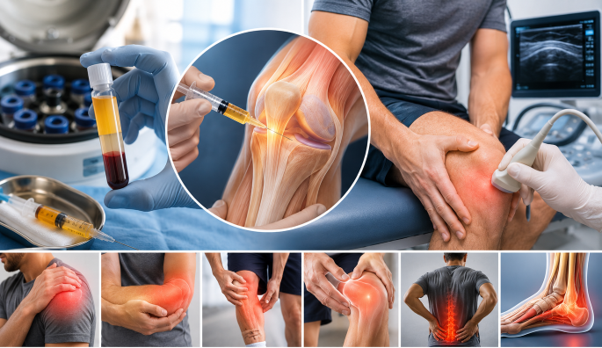
Platelet Rich Plasma (PRP) is one of the newest forms of regenerative medicine treatment, which utilizes a concentrated portion of your very own blood for quicker healing of damaged ligaments, tendons, muscles, and joints. PRP includes a high concentration of platelets – blood cells that have growth factors and proteins needed for tissue healing and regeneration.
The process of PRP involves:
1. Taking a small sample of your own blood
2. Spinning it in a centrifuge for the separation and concentration of platelets
3. Injection of the concentrated PRP to the injured area through image-guided process
This concentrated delivery of healing factors stimulates your body’s natural repair mechanisms, promoting faster and more complete recovery than would occur on its own.
Conditions Treated with PRP
PRP treatment is applied for numerous cases of orthopedic and musculoskeletal disorders, including:
Tendinous Pathologies
· Tennis elbow (lateral epicondylitis)
· Golfer’s elbow (medial epicondylitis)
· Rotator cuff tendinopathy
· Achilles tendinopathy
· Patellar tendinopathy (jumper’s knee)
· Hamstring tendinopathy
· Gluteal tendinopathy
Joint Disorders
· Knee arthritis
· Hip arthritis
· Shoulder arthritis
· Ankle arthritis
· Meniscus damage
· Labrum injury (hip and shoulder joints)
Ligaments and Muscles Injuries
· Ankle sprains and ligaments instability
· Plantar fasciitis
· Muscle injury and tears
· Sacroiliac (SI) joint disorder
Spinal Disorders
· Back pain due to intervertebral discs and facet joint degeneration
· SI joint disorder
· Ligaments instability leading to spine dysfunction
Other Uses
· Non-union bone fractures (as an additional therapy)
· Postoperative treatment
· Chronic wounds
How Does PRP Work?
PRP’s Science
Besides their main function in clot formation, platelets are known for their healing properties. Concentrated and applied to the area of injury, PRP is responsible for releasing various growth factors, which:
· Accelerate cell multiplication and regeneration
· Increase collagen production, resulting in healthy and durable tendons and ligaments
· Improve angiogenesis and thus nutrient transportation
· Limit inflammation and control immune system response
· Recruit stem cells to promote the healing process
Among other important growth factors, PRP contains:
· PDGF (Platelet-Derived Growth Factor), promoting cell multiplication and collagen production
· TGF-β (Transforming Growth Factor-beta), regulating tissue repair and remodeling
· VEGF (Vascular Endothelial Growth Factor), encouraging angiogenesis
· EGF (Epidermal Growth Factor), stimulating tissue recovery
· IGF-1 (Insulin-Like Growth Factor-1), aiding in cartilage and bone repair
Pre-Procedure Evaluation
Prior to carrying out the procedure, Dr. Andrew Clary, DO, will evaluate:
· Via medical history and physical examination
· Your injury and overall condition based on results of imaging studies such as X-ray, MRI, or ultrasound
· Y our objectives and expectations regarding the procedure, along with alternative treatment options
During the Procedure
· Procedure Time: 45–60 minutes (drawing blood, processing, and injection)
· Blood Drawing: A small amount of blood is taken from your arm, usually 30-60 mL
· Centrifugation: Your blood is separated using a centrifuge for 10-15 minutes
· Preparation: PRP is extracted and prepared for an injection
· Injection: With the help of an ultrasound, PRP is injected directly into the injured tissues/joint space
Post Procedure
You are allowed to leave the clinic on the same day. You might experience:
• Soreness or swelling at the injection site for 2-5 days
• Stiffness of the injured tissues/joint
• Pressure or fullness as the treatment starts its work
Such reactions are normal since the process of healing has started to work.
Treatment Course and Expected Results
How Many Sessions Are Required?
A patient may need 1-3 sessions of PRP, each spaced out at 4-6 week intervals. These will depend on:
· The seriousness of the condition
· The tissue type to be treated
· Your own healing potential
· Your level of activity and rehabilitation adherence
What is the Time Frame for Improvement?
PRP treatment relies on promoting your body’s natural healing process. Although some people report improvement within 2-4 weeks, the best results come about when new tissues develop over 3-6 months.
How Long Does It Last?
Whereas other treatments simply treat the symptoms, PRP tackles the underlying problem and provides more lasting benefits. Patients have reported effects that last up to 1-2 years or even permanently.
PRP vs. Other Treatments
Treatment | Mechanism | Duration of Relief | Best For |
PRP | Concentrated growth factors from your own blood | Long-term (1–2+ years) | Moderate to severe tendon, ligament, and joint injuries; osteoarthritis |
Prolotherapy | Dextrose solution stimulates inflammatory healing | Long-term to permanent | Ligament laxity, joint instability, mild to moderate injuries |
Corticosteroid Injections | Suppresses inflammation | Temporary (weeks to months) | Acute inflammatory flares; not for tissue repair |
Hyaluronic Acid | Lubricates joint space | Temporary (6–12 months) | Knee osteoarthritis symptom relief |
Stem Cell Therapy | Differentiates into new tissue cells | Long-term | Advanced degeneration; higher cost and complexity |
Surgery | Structural repair or replacement | Variable | Complete tears, advanced degeneration unresponsive to conservative care |
Dr. Clary will discuss all options and recommend the most appropriate treatment based on your diagnosis, severity, and goals.
Why Choose Sage Spine Pain and Nerve Center for PRP?
Regenerative Medicine Expertise
Dr. Andrew Clary, DO, has specialized knowledge in interventional pain management and regenerative medicine treatments. The specialist will make sure that your PRP is properly prepared, concentrated, and administered.
Ultrasound Guidance
Real-time ultrasound guidance is used in administering PRP injections to make sure that:
· The target area (tendons, ligaments, joint structures) is precisely located
· The administration site does not come into contact with nerves, blood vessels, and any other sensitive tissues
· Maximum benefit is achieved
· Any risks associated with the procedure are minimized
PRP Processing and Administration on the Same Day
Your blood will be collected and processed on the same day at our clinic using advanced centrifugation technology.
Local Access to Advanced Regenerative Care
Patients from North Branch, Chisago County, and surrounding areas including Cambridge, Rush City, Lindstrom, Forest Lake, and more do not have to go all the way into the Twin Cities for PRP therapy. Sage Spine Pain and Nerve Center provides subspecialty PRP therapy in your local area.
Integrated & Multidisciplinary Treatment Approach
Dr. Clary combines PRP therapy along with other therapies to help get you the best results possible:
· Physical Therapy for Strength and Flexibility
· Modification of activity and ergonomic advice
· Nutritional assistance with healing
· Imaging follow up of tissue healing where necessary
Insurance & Coverage
PRP insurance coverage differs greatly depending on the insurance plan and the condition being treated. While PRP may be covered by insurance under certain circumstances (i.e., knee osteoarthritis, tennis elbow), in other cases, PRP is considered investigational/experimental. Our staff at the office will:
· Check your benefits prior to scheduling
· Give you accurate price quotes for out-of-pocket expenses
· Work with you on any necessary financing
Call 651-337-8201 to discuss your coverage and scheduling options.
Frequently Asked Questions
Is PRP Painful?
The blood draw process is just like a typical blood draw procedure. The injection might hurt a bit but you will get a local anesthetic to numb the area and reduce the pain. It is normal to have some soreness for 2-5 days following the injection, as that shows that the healing process is taking place.
Are there any Side Effects?
Since PRP therapy involves your own blood, there is no chance of allergies or rejection. Some of the mild side effects that might happen are temporary swelling, bruising, or soreness at the injection point. Infection is very uncommon too, especially due to ultrasound guidance.
How is PRP therapy different from Prolotherapy?
They both are regenerative medicine treatments, but PRP involves concentrated platelets from your own blood, which gives more of the growth factors than Prolotherapy. For severe and moderate conditions or quick healing, PRP is a better choice, while Prolotherapy includes dextrose injections and is relatively cheaper.
Can I take pain medication after PRP?
You should avoid anti-inflammatory medicines (ibuprofen, naproxen, aspirin) during the first 1–2 weeks after treatment, as it can prevent proper healing. Tylenol (acetaminophen) is okay to use. You will receive full instructions from Dr. Clary after the procedure.
What should I do after PRP treatment?
The majority of patients are recommended to:
• Allow rest for the treated part for 48–72 hours
• Avoid vigorous exercise for 1–2 weeks
• Return to usual activities gradually
• Start physiotherapy exercises 2–4 weeks after injection to get the best results possible
Who should not receive PRP treatment?
PRP treatment may not be suitable for patients with:
• Acute infection or cancer in the treated area
• Major bleeding problems or uncontrolled coagulopathy
• Platelets dysfunction disorders
• Too severe degenerative changes which require surgery
• Unreasonable expectations about the results of PRP treatment
Dr. Clary will evaluate your eligibility for PRP treatment during consultation.
Is PRP FDA approved?
Although PRP is not approved by the FDA as a medicine, the preparation of PRP from the patient’s blood falls under the medical procedure category. The equipment that is employed to obtain PRP is FDA-approved. PRP is applied clinically for over twenty years with an extensive amount of scientific studies proving its effectiveness.
When to Consider PRP
PRP might be suitable for you if:
· You have tendinitis, ligament damage or joint pain for more than 3 months
· You have tried rest, physiotherapy, and medicines but have not had success with them
· You are not willing to undergo surgery or use medicines for a long time
· You have been told that you have osteoarthritis and are looking for ways to postpone joint replacement
· You are an athlete and want to get back into shape as soon as possible
· You would like to have a biological treatment and rely on the power of your own body to heal
Take the First Step Toward Regenerative Healing
Living with chronic musculoskeletal pain doesn’t have to restrict your life. If you’re looking for Platelet Rich Plasma in North Branch, MN, contact Dr. Andrew Clary, DO, and his team from Sage Spine Pain & Nerve Center for this revolutionary treatment method.
Contact us today to schedule your comprehensive evaluation:
📞 Call: 651-337-8201
Our team will assess your condition, review your imaging, and determine whether PRP therapy is the right solution for your chronic pain.